
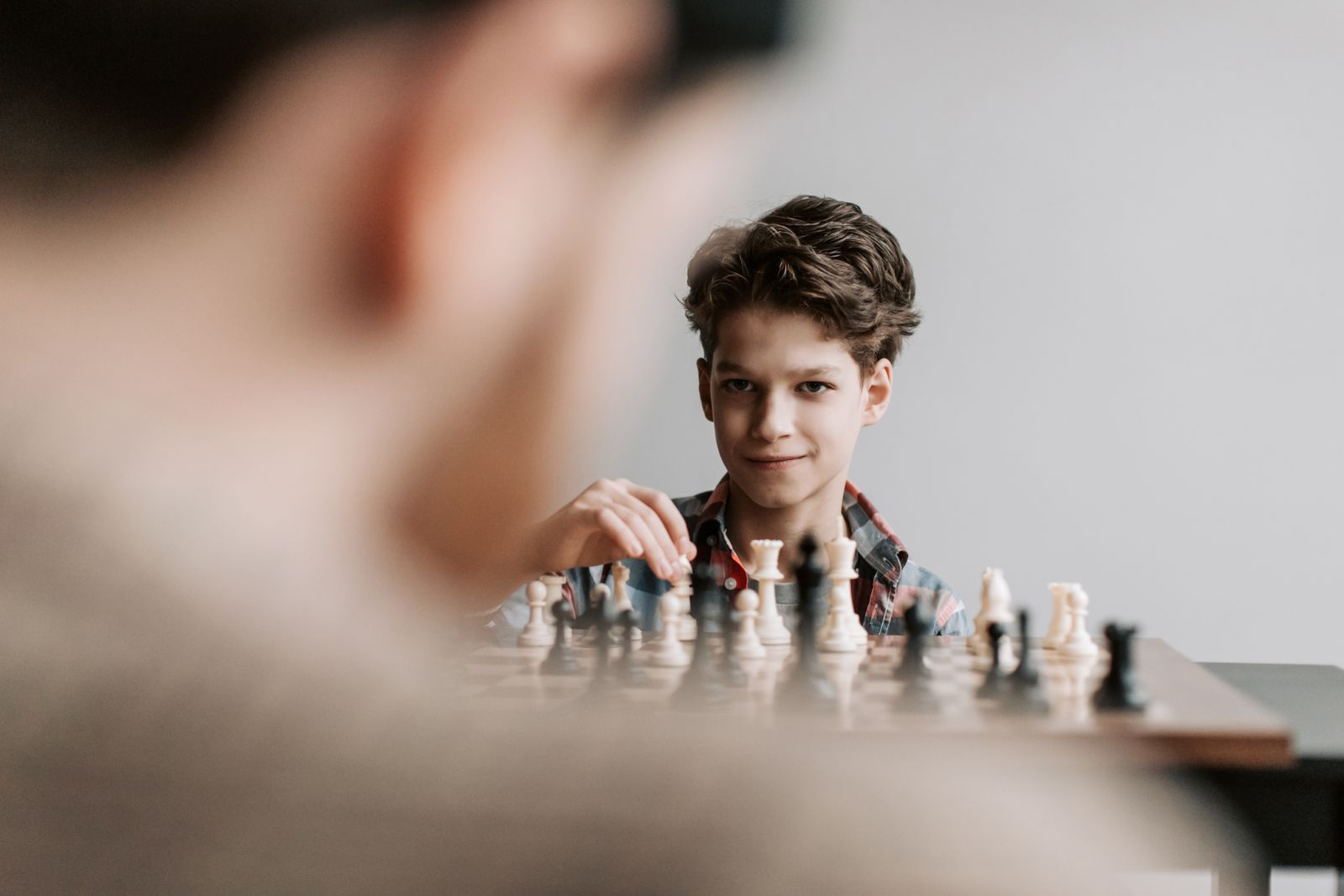
Getting a child to concentrate for a long period can be difficult. Modern life gives children plenty of fast-moving entertainment, so an activity that asks them to sit, observe and think can feel very different.
Chess does exactly that — but it does so through a game.
Chess makes attention necessary
A child cannot safely make a move without looking at the position. What changed? What is attacked? What can the opponent do? The need to pay attention is built into the activity.
Thinking time has a purpose
Chess is not simply about sitting quietly. The child is using that time to compare options, calculate and make a decision. That makes concentration active rather than passive.
Short sessions can still be useful
A young learner does not need to play a two-hour game to practise focus. A short puzzle session or a carefully reviewed game can provide meaningful practice.
Progress comes gradually
Some children will focus for only a few minutes at first. That is okay. With age-appropriate tasks and interesting positions, their ability to stay engaged can grow.
The bigger lesson
Chess should not be sold as a guaranteed cure for attention problems. It is better understood as one activity that gives children repeated practice in sustained, purposeful attention.
Book a free trial and tell us the student’s age, country and current level.