
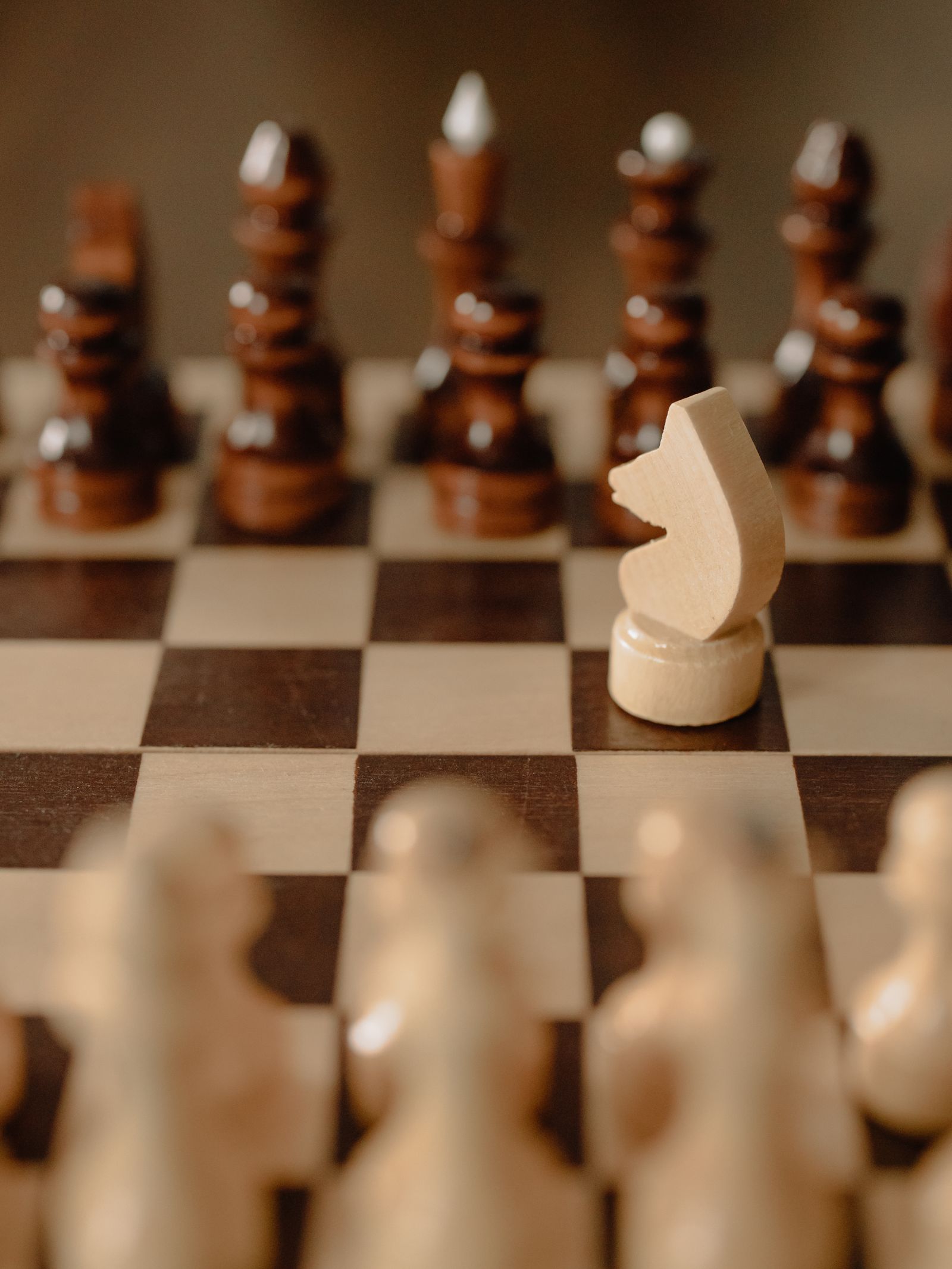
Tactics are often the moment when chess suddenly becomes exciting for a child. Instead of simply moving pieces around, they discover that a clever move can win material, create a threat or even finish the game immediately.
Here are five tactical ideas that are worth learning well.
1. Forks
A fork happens when one piece attacks two or more targets at once. Knights are especially famous for forks, but almost any piece can create one. The important lesson is learning to look for moves that create more than one threat.
2. Pins
A pinned piece cannot move freely because something more valuable is behind it. Children enjoy pins because the board starts to feel like a puzzle: the piece looks available, but there is a reason it cannot move.
3. Skewers
A skewer is similar to a pin, but the valuable piece is in front. When it moves away, the less valuable piece behind it can be captured.
4. Discovered attacks
Sometimes moving one piece reveals an attack from another piece behind it. These moves can be surprisingly powerful and are a great introduction to the idea that not every threat is visible immediately.
5. Double attacks
A double attack creates two threats with one move. Once children understand this idea, they start asking: “Can I make my opponent answer two problems at once?”
How to teach tactics well
The goal is not to make children memorise definitions. Show a position, ask what they notice, let them calculate and then discuss the idea. Pattern recognition grows through repeated exposure.
Book a free trial and tell us the student’s age, country and current level.