
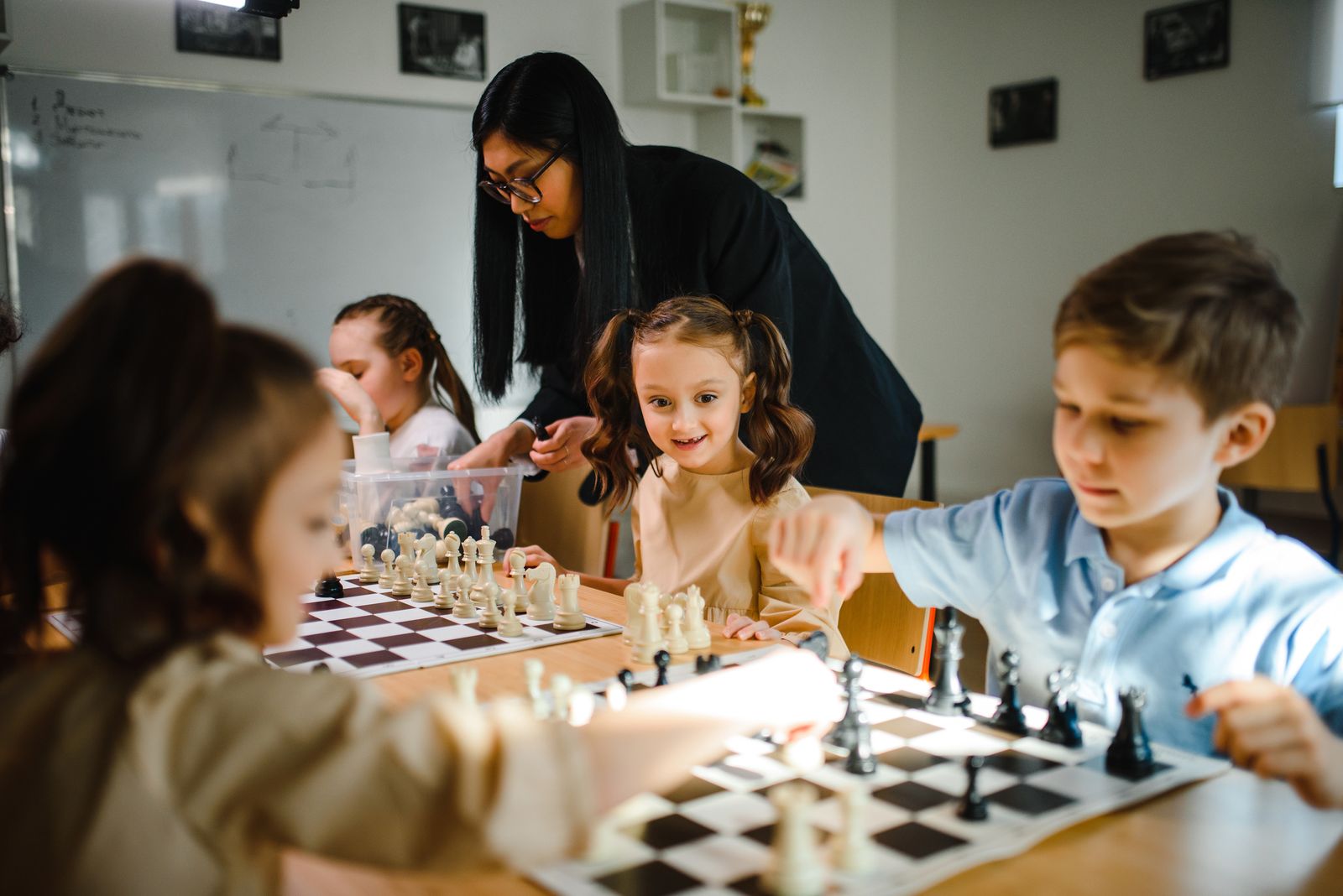
There is a funny moment that happens with many new chess learners. At first, the board looks complicated. There are 64 squares, six different pieces and a lot of rules to remember.
Then something clicks. The child starts recognising the pieces, remembers how they move and suddenly realises they can make a plan of their own. That first sense of control is a big part of why chess works so well as a learning activity.
The rules give children a clear starting point
Beginners do not have to know everything at once. They can learn one piece, one rule and one small idea at a time. The board gives immediate feedback, which makes abstract ideas easier to understand.
Every move creates a small decision
Even a beginner quickly has to choose between moves. That makes chess interactive from the start. Instead of only listening to an explanation, the child gets to make decisions and see what happens.
Progress feels visible
A child who could not remember how a bishop moved may soon be setting up the board, spotting checks and finding simple checkmates. Those small milestones can make learning feel rewarding.
The goal is not to rush
Good beginner coaching is not about filling a child's head with opening names. It is about building a comfortable relationship with the board: understand, try, make mistakes, ask questions and try again.
A strong foundation makes later learning easier
Once children are comfortable with the basics, tactics, strategy and tournament preparation become much easier to introduce. The early stage is not a race; it is the foundation for everything that follows.
Book a free trial and tell us the student’s age, country and current level.