
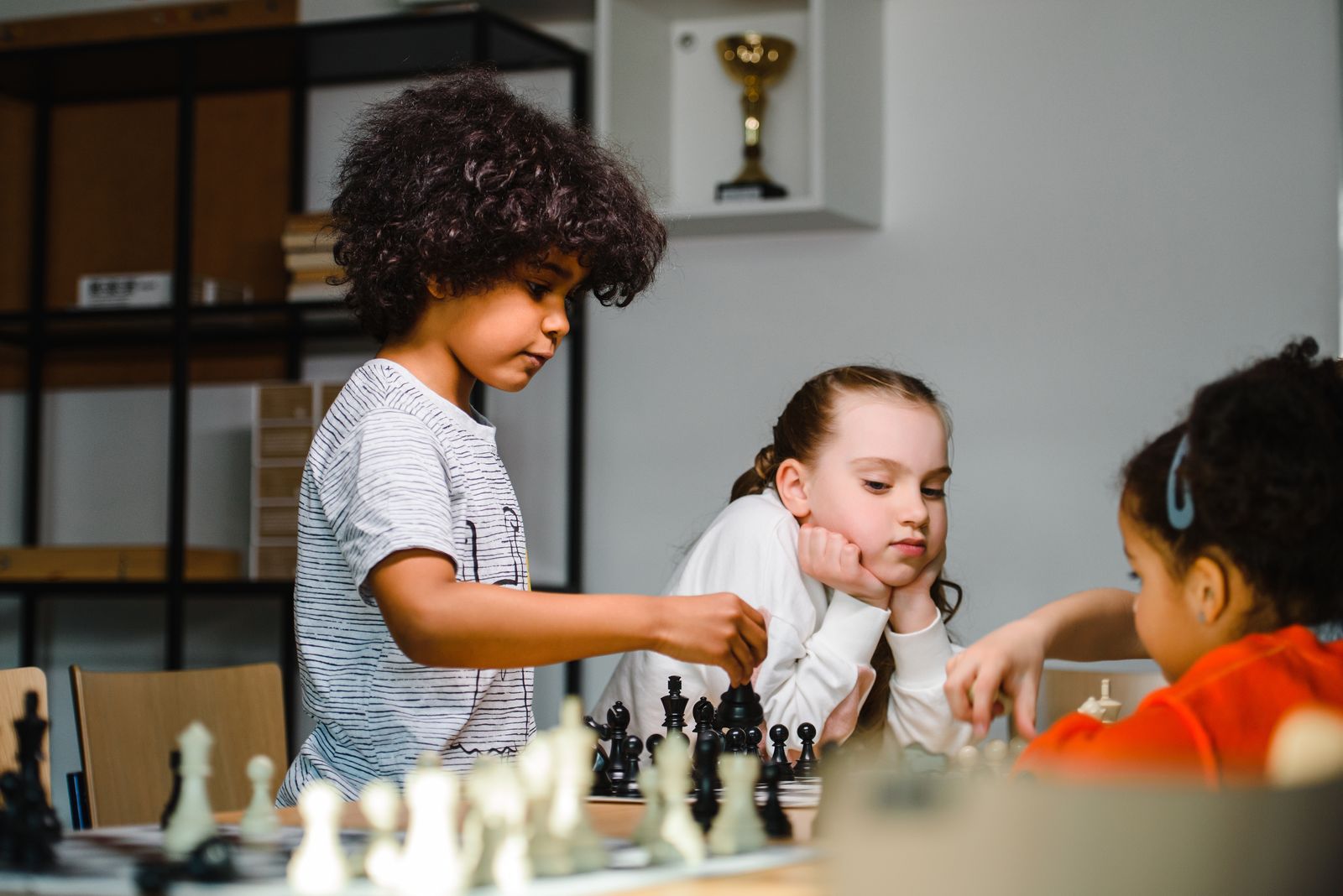
When a child first learns chess, the excitement is usually about the pieces. They want to know how the knight jumps, how the queen moves, and eventually how to deliver their first checkmate.
But after a few games, something more interesting starts happening. Children begin to think before they act. They notice patterns, make plans, change those plans and learn that one decision can affect what happens several moves later.
That is what makes chess such a valuable activity. It gives children a place to practise thinking, making decisions, handling mistakes and trying again.
Problem-solving: learning to look for a way forward
A chess position is a problem waiting to be solved. There might be a piece under attack, a king in danger or an opportunity that is easy to miss. The child has to stop and ask, “What can I do here?” With practice, that habit can carry into other situations: when something is difficult, look for possible solutions instead of giving up immediately.
Critical thinking: don't play the first move you see
One of the simplest lessons in chess is also one of the most useful: think before you move. A child gradually learns to ask what will happen after a move, what the opponent can do and whether there is a better option. That habit of checking an idea before accepting it is a big part of critical thinking.
Pattern recognition: seeing familiar ideas
Strong players do not calculate every position from scratch. They recognise patterns — forks, pins, mating ideas, trapped pieces and familiar structures. Children develop this skill gradually through puzzles and games, learning to connect a new position with something they have seen before.
Creativity: finding an idea that is not obvious
Chess is logical, but it can also be wonderfully creative. Sometimes the strongest move is a surprising sacrifice or an unusual way to create a threat. When children are encouraged to explore ideas rather than only memorise moves, they learn that a problem can have more than one possible approach.
Planning and decision-making
Chess encourages children to think beyond the move they are making right now. A move may support an idea several moves later. At the same time, children learn that plans sometimes need to change. Make a plan, but stay flexible.
Patience and concentration
A chess game rewards attention. A rushed move can change the whole game. Over time, children get practice staying with a problem instead of immediately looking for an easy answer. They learn that some decisions are worth slowing down for.
Learning from mistakes
Every chess player makes mistakes. A lost game can be disappointing, but a good review turns that disappointment into information. What was missed? Why did the move fail? What could have been done differently? This can help children see mistakes as part of learning.
Confidence and independent thinking
During a game, the child eventually has to make the decision. When they solve a difficult position or find a good move without being given the answer, they experience something important: “I figured this out myself.” Those moments can build genuine confidence.
Sportsmanship and emotional control
Chess gives children opportunities to practise winning and losing. They learn to follow rules, respect an opponent and continue thinking after a mistake. Winning is enjoyable, but learning how to respond after losing is just as valuable.
The bigger lesson behind the chessboard
Chess is not a magic formula and simply playing games does not guarantee every life skill will improve. The way children learn matters. With questions, puzzles, guided games and thoughtful reviews, chess becomes a practical place to practise thinking, deciding, reviewing and improving.
Book a free trial and tell us the student’s age, country and current level.