

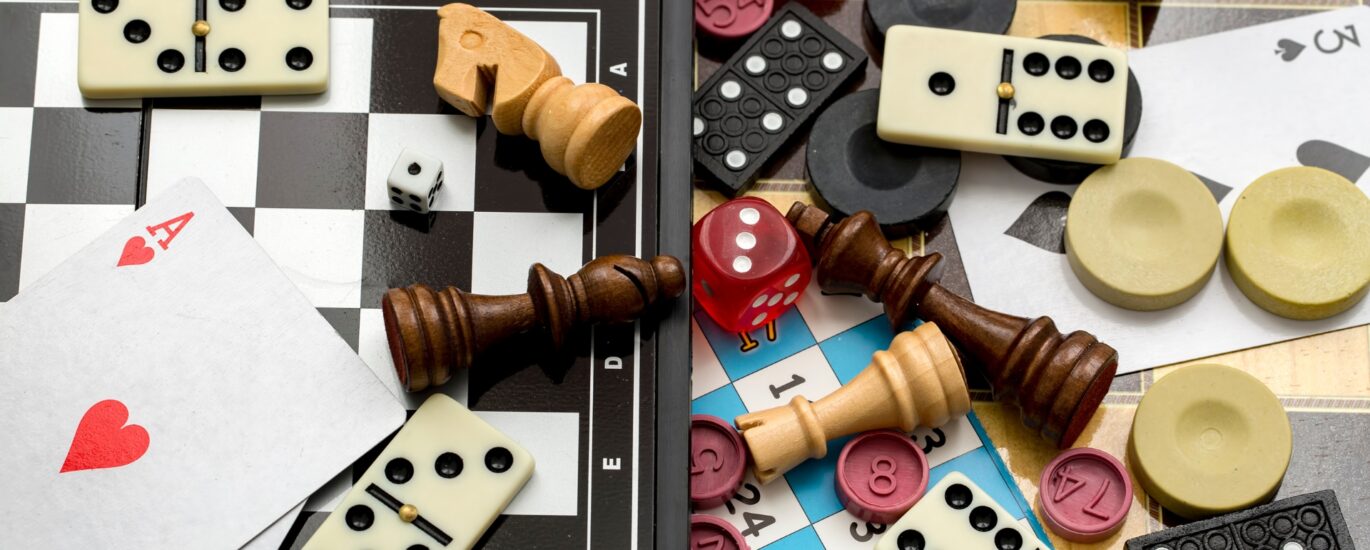
Board games have always been a way for people to sharpen their thinking, socialize, and relax. From classics like Ludo, Snakes and Ladders, and Monopoly to strategy-heavy games like Scrabble or Go, each board game comes with its own charm and mental benefits. But chess stands apart from almost all others. It isn’t just a pastime—it’s a structured mental discipline, and today many learners even turn to an online chess coaching platform to study it seriously at any age.
So, what exactly makes chess different from other board games?
1. Depth of Strategy
Most board games rely on either chance, simple tactics, or a limited set of strategies. For example, Ludo depends heavily on dice rolls, while Monopoly is influenced by luck in property acquisition.
Chess, on the other hand, has virtually infinite depth. Every game presents new situations, requiring players to think many moves ahead. This strategic complexity makes it not just entertainment but also a lifelong pursuit of improvement.
2. No Element of Chance
Dice and cards often decide outcomes in board games. Even if you play well, luck can overturn your effort. Chess has no such randomness—the result depends entirely on skill, memory, and decision-making. This fairness is one reason why chess is considered a sport, not just a game.
3. Cognitive Demands
While other board games may improve vocabulary (Scrabble) or quick arithmetic (Monopoly), chess exercises multiple cognitive functions at once:
-
Memory – recalling patterns, openings, and past games.
-
Problem-solving – finding the best move under pressure.
-
Concentration – sustaining focus for long stretches.
-
Logical reasoning – evaluating trade-offs and consequences.
Few board games demand this much simultaneous brain activity.
4. Global Recognition as a Competitive Sport
Chess is officially recognized as a sport by the International Olympic Committee. It has world championships, FIDE ratings, and structured competitive ladders. In contrast, most board games remain recreational activities with no universally recognized competitive system.
5. Educational Value
Many board games teach something—Scrabble improves vocabulary, Settlers of Catan teaches resource management, etc. But chess uniquely trains critical thinking, patience, pattern recognition, and decision-making under stress. That’s why it is often integrated into school programs worldwide.
6. Longevity and Universality
Chess has a history of over a thousand years and is played across cultures without losing relevance. Few other board games have this global, timeless appeal. Its rules are simple enough for a child to learn, yet complex enough for grandmasters to dedicate their entire lives to mastering.
7. Structured Progression of Learning
Other board games rarely have a formal learning path—you just play and get better by experience. Chess, however, has a clear progression: from learning how pieces move, to basic tactics, to mastering openings, middle games, and endgames. This structured approach makes it more like studying a subject than just playing a game.
Final Thoughts
Other board games may be fun, social, and even educational in their way, but chess is in a category of its own. It combines strategy, discipline, and skill in a way that no dice roll or card shuffle can replicate. For those looking to go beyond entertainment and truly strengthen the mind, chess remains unmatched among board games.
